

Tag: dental crowns posts
Why Are My New Front Crowns Causing Jaw Pain?
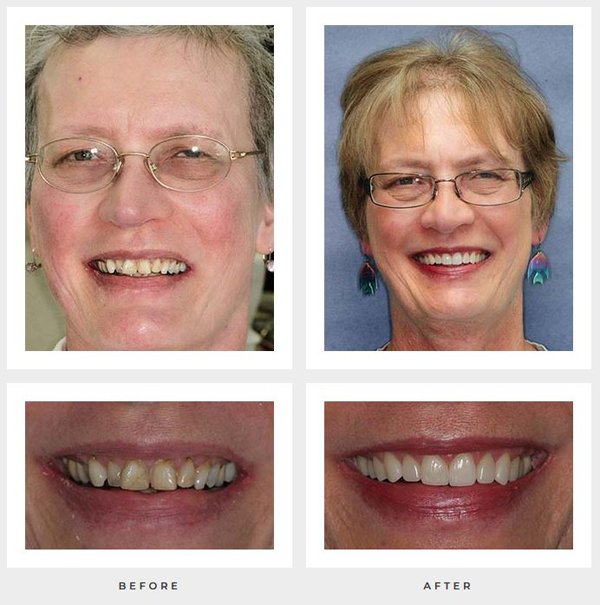
 In June, I had crowns placed on my six upper front teeth, from canine to canine. I had a large gap between my two front teeth, and the crowns closed it.
Since then, I’ve had trouble speaking clearly. I feel like I’m having to learn how to pronounce certain words again, and the effort has caused constant jaw and neck pain. My mouth feels dry, and my lips have been numb.
What could be causing these problems? Is it possible to have some of the space between my two front teeth restored without replacing all six crowns? – Thanks. Jovana
Jovana,
Crowns that are too thick or too long could contribute to the speech changes, jaw and neck pain, and difficulty comfortably closing your lips that you describe.
One possibility is a condition called lip incompetence. This means your lips do not come together naturally and comfortably when your teeth are together. With a balanced bite and properly proportioned front teeth, your lips should generally rest together without conscious effort.
Your dry mouth and lip numbness make us wonder whether you are straining to keep your lips closed or whether the new shape of your teeth has changed the way your lips rest and how your lips and teeth form speech.
Could the Crowns Also Be Affecting Your Bite?
The size and shape of the crowns could change how your teeth come together. If the crowns interfere with your bite, your jaw muscles may have to work differently than they did before treatment.
That could potentially explain several of your symptoms:
- Difficulty speaking clearly
- Jaw and neck discomfort
- Muscle strain when bringing your teeth or lips together
- Difficulty allowing your lips to rest naturally
Closing a large space between the two front teeth changes their width and contours, so a skilled dentist must evaluate it carefully.
Should You Be Concerned About Dry Mouth?
Persistent dry mouth matters because saliva helps protect your teeth from decay. Saliva washes the teeth, helps neutralize acids, and contains components that help control harmful bacteria. We don’t recommend waiting and hoping these symptoms, including your ongoing pain, resolve.
Can the Space Between the Front Crowns Be Restored?
A dentist would need to examine the crowns, your bite, and the proportions of your front teeth before determining whether restoring the space between them is an option. Depending on the crown design, restoring some of the original space may require reshaping or replacing the two front crowns.
We recommend getting a second opinion from a dentist with extensive experience in cosmetic and restorative dentistry. The dentist will evaluate the thickness and length of the crowns, your bite, your lip position, and the way the crowns have changed your speech. That examination should help determine whether crowns are contributing to your symptoms and what can be done to correct the problem.
Dr. Thaddeus Michalski, a Rocky Hill, Connecticut dentist, sponsors this post. Read why many of his patients say he is one of the best dentists in town.
Will I Need Another Full-Mouth Reconstruction?
I paid $42k for a full-mouth reconstruction in 2023. My mouth is raw, chewing, hurts, and I have lost several crowns and veneers. I’m afraid that two of the dental implants are failing. How can I start over again? I’m sure I don’t have a choice. Thanks. Kofi from TX
Kofi,
We are sorry that you’re experiencing multiple problems with your full-mouth reconstruction. We know it’s frustrating.
The first step is to find a highly qualified dentist when faced with the need for dental implants and addressing previous cosmetic dental issues. Some dental practices may offer lower costs by taking shortcuts, but this can compromise your treatment. While you don’t have to choose the most expensive dentist, beware of unusually low fees because you may not get comprehensive care, which is essential for full-mouth reconstruction.
Finding a clinician with demonstrable skills in implant procedures and advanced cosmetic dentistry is essential. To identify a dentist who can meet these demanding needs, consider the following factors:
- Verification of Implantology Credentials: Look for dentists with advanced training and earned credentials from reputable implant organizations. A strong indicator of expertise is attaining fellowship or diplomate status from the International Congress of Oral Implantologists or the American Board of Oral Implantology (associated with the American Academy of Implant Dentistry). Training from American university implant programs or the Misch Implant Institute is also a higher level of qualification.
- Commitment to Careful Diagnosis: Pay attention to the thoroughness of the diagnostic process. For example, a dentist planning multiple implant placements should use a 3D CT scan to ensure precise implant placement.
- Assessment of Online Reviews: Check online patient reviews, especially on Google and Yelp, for mentions of clinical issues or positive experiences. Weigh individual reviews carefully because some dentists with limitations might still have enthusiastic supporters. Still, reviews are critical in choosing a dentist for full-mouth reconstruction.
Finding a Dentist Who Produces Cosmetic Excellence
The success of your treatment requires functional implants and beautifully crafted and durable crowns or porcelain veneers. Beyond the technical aspects of implant placement, your dental history requires an advanced cosmetic dentist who can correct your full-mouth rehabilitation and help you smile comfortably and confidently.
Dr. Thaddeus Michalski, a Rocky Hill, Connecticut dentist and Diplomate of the International Congress of Oral Implantologists, sponsors this post. Read how he strives to provide some of the best dental care in Rocky Hill.
Why Do My New Dental Crowns Cause Sensitivity and Mouth Sores?
My new dental crowns have caused more oral problems that make me regret replacing my old crowns. I have teeth sensitivity, excess saliva, mouth sores, bitter taste, bad breath, and chapped lips. My dentist has offered to readjust my bite, but that’s not my complaint. Will I need new crowns? – Thanks. TJ from Boston
TJ,
We understand your concerns and frustration.
What Symptoms Can You Expect with New Dental Crowns?
Well-crafted, properly placed dental crowns should not create lingering symptoms. Although you may feel temporary tooth sensitivity after a procedure, your crowns should not be noticeable—without discomfort or undesirable oral complications.
Your symptoms require a thorough assessment to determine whether they relate to your new dental crowns or underlying medical conditions. A professional evaluation is essential for accurate diagnosis and effective management.
Below are considerations for your symptoms:
Oral sores
Stress can be a contributing factor, but a dermatological evaluation may be required to rule out inflammatory skin conditions.
Bitter taste and bad breath
- Bacteria and salivary buildup m
- Systemic factors such as medications, supplements, respiratory infections, and GERD should also be investigated
Teeth sensitivity
- Post-operative sensitivity following crown preparation is typical.
- Prolonged sensitivity beyond eight weeks necessitates a dental review.
Diligent oral hygiene, including gums, teeth, and tongue, can minimize bitter taste and halitosis. However, we recommend a second opinion and a comprehensive dental examination for multiple oral tissue concerns. A skilled cosmetic dentist can determine whether crown adjustments or new crowns will resolve your symptoms.
Dr. Thaddeus Michalski, a Rocky Hill, Connecticut dentist, sponsors this post. Find out how he strives to provide some of the best dentistry in Rocky Hill.
Why Are My Crowned Teeth Sensitive to Heat?
I have implant crowns and three crowns on my natural teeth. The crowns on my natural teeth are more than 20 years old. The crowns are on my left front tooth and the two teeth behind them. Two of the teeth are sensitive to heat. Maybe I notice it more now that the weather is cooler, and I have been eating more soup and drinking more tea. The pain is increasing. My dentist is from Portugal and is out of the country on holiday until February 12. He takes the trip yearly. Is this something that can wait, or should I see another dentist? – Thank you. Giovanni from NJ
Giovanni,
We understand your concerns. You need dental care promptly.
Why Are Crowned Teeth Sensitive to Heat?
Sudden pain and sensitivity to heat are symptoms of a dying tooth. Your sensitive teeth are infected. As the tissue inside the tooth swells, it releases gasses. When the tooth is exposed to hot temperatures, the pressure increases, and so does your pain.
What Causes an Infection Beneath Dental Crowns?
Decay beneath your crowns or exposed root surfaces might be the cause of irritation and infection in your teeth.
A dentist must remove your crowns to examine your teeth and see their condition. Afterward, root canal treatment will remove the dead pulp. And a dentist can replace the pulp with filler material. And you will need new crowns. Ask the dentist also to check the old crown on the third tooth. Beneath the crown, your tooth may be irritated and at risk for infection like the others.
How Long Does a Dental Implant Take?
Getting a dental implant from start to finish takes three to nine months. The process takes time because of several phases. Depending on your situation, you can expect several steps:
- Initial consultation – Your dentist or oral surgeon will complete an exam and a 3-D x-ray to ensure you are a candidate for implants.
- Tooth removal – Surgically removing teeth takes about 30 minutes unless there are complications.
- Implant surgery – Inserting implants through your gum and jawbone takes one to two hours per implant.
- Healing – You will wait three to four months while the implant and bone fuse.
- Periodic checkups – Your surgeon or dentist will check the surgical sites for proper healing during the healing process.
- Final crown – After the healing period, your dentist will take images of your mouth for a lab to make the final implant crowns. Your dentist will attach crowns to the implants.
Dr. Thaddeus Michalski, a Rocky Hill, Connecticut dentist and Diplomate of the International Congress of Oral Implantologists, sponsors this post.
Will New Dental Crowns Help My Bleeding and Irritated Gums?
My dentist replaced my eight upper crowns this past summer because my gums were swollen and bleeding. The new crowns didn’t improve the situation, so my dentist referred me to a periodontist who advised me to wear temporary crowns for about three months until my gums healed.
Two weeks ago, I got a second opinion from a dentist who said the crowns were over-contoured and irritated my gums. She recommended new crowns. I get deep cleanings for gum disease now, and the hygienist said she removed excess cement near my gumline. I can’t afford to keep getting new crowns, so I had a virtual consultation with a US-trained dentist who practices in Mexico. Will new crowns that fit well improve my gum inflammation and bleeding? – Thanks. Jonah from Dallas, TX
Jonah,
Over-contoured crowns can cause gum inflammation, swelling, redness, and bleeding. Natural teeth have contours that dental crowns should replicate to support your gum health.
Over-contoured crowns cause the following problems:
- Exert excessive pressure on the gums
- Create spaces that trap food particles, increasing the risk of irritation and gum disease
A dentist must meticulously remove all excess cement after crown placement because leftover cement can contribute to gum irritation. Failure to remove excess cement is unacceptable dental practice. You probably need new dental crowns. However, consult an advanced cosmetic dentist in the US to evaluate your gum health and crowns.
Should You Get New Dental Crowns in Mexico?
Before getting new dental crowns in Mexico, consider these factors:
- Potential for recurring issues: Given your experience with subpar dental care, seeking treatment in Mexico may increase the risk of encountering similar problems.
- Standard of dental care in other countries: Quality and care standards differ among countries. The American Dental Association advises you to consider how a country’s sterilization technique and quality standards will affect the outcome of your denture procedure.
- Finding a qualified dentist is crucial: It is crucial to prioritize finding a highly competent and reputable dentist, regardless of location.
Dr. Thaddeus Michalski, a Rocky Hill, Connecticut dentist and Diplomate of the International Congress of Oral Implantologists, sponsors this post. Read why his patients think he is the best dentist in Rocky Hill.
Which Crowns Can Hide a Dark Front Tooth?
The porcelain fused to metal crowns on my center front teeth are 20 years old and look like it. I love to smile and want to know the best crown types. One tooth is dark from a root canal. What crowns should I ask for? Thanks. TJ
TJ
Cosmetic dentists use all-ceramic crowns to produce beautiful results that even a trained specialist can’t distinguish from natural teeth. Any all-ceramic option will withstand the forces of biting with your front teeth. Your choice of a cosmetic dentist is more important than the crown selection. Look for a dentist with keen artistic ability and allow them to choose ceramic crowns. Advanced cosmetic dentists collaborate with a master ceramist who knows dental materials and can recommend a crown type based on your surrounding teeth and the condition of the teeth beneath the crowns.
How Can a Crown Conceal a Dark Front Tooth?
A cosmetic dentist will prepare a dark tooth for a crown by masking the color with an opaquer. Options for blocking out the dark color include:
- Applying a composite buildup material over the natural tooth before placing the crown
- Asking a master ceramist to add an opaque layer in feldspathic porcelain, lithium disilicate, or zirconia crown to hide the dark tooth. Zirconia and lithium disilicate may require a thin layer of feldspathic porcelain on the surface to look natural
- Selecting e.max crowns, which have a lithium disilicate core, and applying feldspathic porcelain over the crown
Instead of choosing a crown type and asking a dentist to use it, look for an expert cosmetic dentist. Their advanced training will help them select a crown for your needs and conceal the dark took. Selecting the crown first without knowing a dentist’s credentials can yield unattractive crowns for your front teeth. Schedule consultations with two expert cosmetic dentists to discuss options for natural-looking results with crowns on front teeth.
Rocky Hill cosmetic dentist Dr. Thaddeus Michalski sponsors this post.