


Month: February 2026 posts
How to Request a Refund from a Dentist Without Escalating Conflict
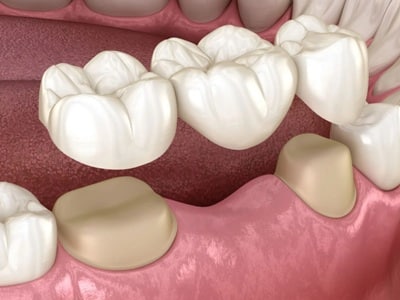
My dentist is in-network with Cigna. He said he would pull my broken upper tooth and place a 4-unit bridge from #7 to #10. We paid $2,100 out of pocket after insurance.
When I returned for the bridge, he didn’t extract the tooth. Instead, he performed a root canal and stitched the gum tissue over the root. I asked him to submit a pre-authorization to insurance. He resisted at first but finally agreed.
Six months later, I learned the bridge won’t be covered at all. Insurance says too many upper teeth are already missing—two molars on the right and the front tooth—and another molar on the left needs extraction. Now the dentist says I owe an additional $1,000.
He offered a refund, but only if we sign a release stating we won’t hold him responsible for any future issues with #9. The temporary flipper has broken twice, and he wants $650 for it unless we sign.
I’m not sure what to do. Should I agree to that? – Thanks. J.L. from PA
JL,
It sounds like your dentist may be concerned about potential liability. You will benefit by staying calm and shifting the conversation toward resolution rather than confrontation.
If you decide to pursue a refund, handle it directly and professionally. You don’t need to threaten or argue. You simply need to be clear about your position and your boundaries.
Here is a practical way to frame the discussion:
- Let him know you would prefer to resolve this without legal action.
- State that you are willing to accept a refund to close the matter.
- Explain that you are not comfortable signing a legal release.
- Clarify that if a refund is not provided, you will explore your legal options.
This keeps the tone measured while making your expectations clear.
What About the Broken Flipper?
If the dental flipper has already broken twice, it would be very difficult for the office to justify collecting additional payment for it. Repeated failures of the appliance weaken the case for charging you again.
You don’t need to spend much energy debating that portion. Focus instead on resolving the broader issue.
Are There Other Options?
Insurance companies and licensing boards take patient complaints seriously, particularly when professionalism or quality of care is questioned.
If you choose to mention these options to your dentist, do so calmly. You might explain that you would prefer not to involve:
- Your dental insurance provider (such as Cigna)
- The state dental board
Mention this as a last resort—not a threat. Your goal is to encourage a fair resolution, not to escalate tension.
Dr. Thaddeus Michalski, a Hartford, Connecticut, dentist, sponsors this post. Read why many of his patients say he is one of the best dentists in town.
Can a Leftover Tooth Root Cause Pain After Extraction?
 In early January, I had my lower right wisdom tooth removed. The dentist wouldn’t allow me to handle or keep the tooth. My gum needed three weeks to close, which made me question whether everything was healing normally.
Not long after the procedure, I developed pain on the right side of my face, in my ear, and in the back of my left eye. While the facial and ear pain has decreased a bit, the discomfort behind my eye persists. I wonder whether a piece of the tooth may still be in the socket and causing an infection. Would that explain why my dentist wouldn’t let me see the tooth? Thanks. Nida from MD
Nida,
After a wisdom tooth extraction with an open socket, infection is uncommon because fluids can drain naturally. Infections occur more often when an impacted tooth requires stitches that close the gum over the site.
If a full root or a large fragment remains in the socket, the gum can heal over it, trapping bacteria in the jaw. This situation may lead to persistent pain, swelling, or infection.
Why Might Symptoms Linger After Tooth Extraction?
Lingering symptoms may require evaluation from another dentist, ideally an oral surgeon who can both diagnose and treat the problem. An X-ray provides the clearest way to see whether any tooth structure remains.
This process helps determine:
- Whether a retained root is causing symptoms
- Whether the bone has already healed over the area
- How complex the removal would be if needed
If a significant root was left behind, requesting a refund could be a reasonable next step.
Why Might a Tooth Root Fracture During Extraction?
Tooth roots sometimes break during removal, particularly in older adults whose roots may thicken over time. This complication can happen even with careful treatment and does not necessarily reflect poor care.
Appropriate management depends on the fragment size:
- Small tips in sensitive areas may remain without causing harm
- Larger pieces typically require removal by the dentist or an oral surgeon
Patients should always receive a clear explanation when this occurs.
Many patients want to see or keep their extracted teeth, and dentists often honor that request. If you asked but could not view the tooth, seeking clarification or another opinion would be reasonable.
Dr. Thaddeus Michalski, a Rocky Hill, Connecticut dentist, sponsors this post. Read why many of his patients say he is one of the best dentists in town.