


Month: March 2026 posts
My Dentist Nicked My Dental Bridge Tooth. Is it Ruined?
I’ve been wearing a Maryland bridge since 2002 and have never had any visible issues with it. I do have a history of heavy grinding and know I should be wearing a mouth guard, but I often don’t wear it.
I had two crowns replaced in February, and my dentist adjusted my bite. As part of that, he removed a small amount from the tooth on my bridge. The next day, I noticed a silver dot showing through that area, which had never been there before.
My dentist said my teeth grinding has damaged the dental bridge, but the timing makes me question that. He placed a bonded composite over the spot, but it didn’t last, and now the metal is visible again. Will I need the bridge replaced? Thanks. Geoff from NJ
I’m worried about the condition of my bridge and whether something may have been compromised during the adjustment. I want to address this respectfully, but I’m not sure how to approach the conversation since we see the cause differently. I would appreciate guidance on what to do next.
Geoff,
We cannot see your Maryland bridge or the exposed area, but the timing strongly suggests that the bite adjustment contributed to the problem. Your dentist may be technically correct that grinding during sleep removed the final thin layer of porcelain. Still, the earlier bite adjustment likely weakened that area, making the damage possible.
Consider Getting a Second Opinion
Seeking a second opinion is a practical next step. Many cosmetic dentists provide brief second-opinion evaluations at no cost, and an independent assessment can clarify what happened.
During that visit, ask the dentist to evaluate the porcelain surface near the exposed metal. They will look for:
- Explorer marks on porcelain – A metal explorer will not mark intact glazed porcelain.
- Evidence of bur adjustment – Ground porcelain shows distinct surface markings that indicate mechanical alteration.
This information gives you confidence when discussing the issue with your original dentist. Approach the conversation calmly and without accusation. Bite adjustments exposing metal are mistakes many dentists encounter at some point in their practice.
Can the Bridge Be Repaired Instead of Replaced?
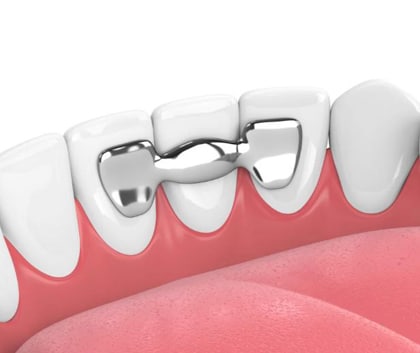
Repair may be possible. A composite placed directly on untreated metal will not bond well and usually fails quickly. A more predictable repair requires specific materials and preparation.
A proper repair would typically include:
- Creating space by carefully reducing additional metal
- Sandblasting the surface with a micro-etcher
- Priming the metal and applying an opaque metal-bonding cement such as Panavia
- Placing, shaping, and polishing a matching composite layer
Even with ideal technique, repair remains unpredictable. A dental bridge can last 15 years or more. Unfortunately, although your bridge is otherwise in good condition, replacement can be a reliable long-term solution for the damage experienced.
Dr. Thaddeus Michalski, a Rocky Hill, Connecticut dentist, sponsors this post. Read why many of his patients say he is one of the best dentists in town.
Is It Time to Ask for a Refund for My Implant Overdenture?
In January 2026, I had a consultation with a dentist about replacing my overdenture, which fits on four mini-implants. I explained that I would be out of state in late April for an extended work assignment and wanted to be sure the denture could be completed before then. The dentist told me it would take about three weeks.
When the denture was delivered in late February, it didn’t seem to line up properly with the implants. The dentist had difficulty getting it into place and had to force it down. After I got home, I tried to eat soft food, but chewing was difficult.
I was able to remove the denture, though it was very hard to take out. When I tried to put it back in, it would not go onto the implants. I contacted the office the next day, and another dentist examined it because my dentist was not available. He told me the denture needed adjustment because the holes around the attachments were not drilled correctly. I’ve also noticed that one side of the denture sits lower than the other, and the teeth lean slightly backward.
The office recently told me the dentist plans to order new gaskets for the attachments and believes that it will correct the issue. At this point, however, I’m not satisfied with how the denture fits, and I don’t have much time left before I leave. I would like to know whether it would be reasonable to request a refund, as I cannot stay for a remake.- Thanks. Lemuel from NV
Lemuel,
When you agreed to proceed with treatment, the dentist told you the overdenture could be completed in about three weeks. That estimate helped you plan your treatment before leaving the state.
Instead, the denture arrived later than expected. When it finally arrived, it did not seat correctly on the implants. Because the treatment was delayed and the denture did not function properly, requesting a refund is reasonable.
Factors That Encourage a Fair Resolution
Dentists typically value their professional reputation and want patients to feel satisfied with their care. When a problem occurs, patients often have several ways to encourage a fair resolution.
These factors can influence how a situation is handled:
- Patient reviews online. Many people check reviews before choosing a dentist.
- Dental board oversight. A complaint may prompt the board to review the treatment.
- Insurance review processes. Insurance companies may investigate concerns about treatment they helped pay for.
Most patients use these options simply as leverage to encourage cooperation, not to create unnecessary conflict.
The Clinical Concerns
An overdenture supported by implants should sit smoothly and securely over the attachment components. Patients should be able to remove and replace it without unusual difficulty.
The issues you described raise several questions about the denture’s construction and fit.
For example:
- The denture required force to fit on the implants
- The attachment openings were not prepared correctly
- The denture appears uneven when in place
Because these problems affect the denture’s basic fit, replacing small attachment parts, such as gaskets, may not fully resolve the issue.
Mini Implant Cases Require Specific Skills
Implant overdentures require technical precision, and dentists often gain these skills through additional training after dental school. Mini implants are less commonly used than standard implants, so experience with them can vary among dentists.
It would be reasonable to ask about the dentist’s experience with mini-implant overdentures, especially if the current denture does not fit well.
How to Ask a Dentist for a Refund
Begin the conversation politely. Let the dentist know that the denture has not worked for you and that your move makes it difficult to continue adjustments or remakes.
Explain that a refund would allow you to seek treatment elsewhere once you relocate. If you appreciated other aspects of the office, mentioning those positive experiences can help keep the discussion constructive.
If the dentist is not willing to work with you, you still have other options, including contacting the dental board or your insurance provider. In many cases, simply discussing the problem openly leads to a reasonable solution.
Hartford, Connecticut, dentist, Dr. Thaddeus Michalski, sponsors this post. Read why many of his patients say he is one of the best dentists in town.