


Tag: dental bonding posts
My Teeth Are Patchy and Discolored After Dental Bonding Removal
In July, I had bonding placed on several teeth to correct chips and wear. Unfortunately, the bonding felt too thick and made it difficult to speak normally, so I asked my dentist to remove it.
Now my teeth have uneven coloring and look patchy. Both my dentist and a second dentist she recommended say this is my natural tooth color. I disagree, and I’ve looked at close-up pictures of myself and can’t see uneven color in my teeth. I’m very upset and concerned that removing the bonding damaged my enamel. How can I find out what happened? – Thanks. Olga from TX
Olga,
We can understand your disappointment. You had bonding to improve the appearance of your teeth, but it didn’t improve their appearance, and it affected your speech. Now that you’ve had it removed, you’re concerned that your natural teeth have been damaged.
Should Dental Bonding Make Your Teeth Feel Thick?
Properly placed dental bonding should follow your teeth’s natural contours without making them noticeably bulky. When bonding repairs chipped or worn teeth, the dentist should focus on replacing the missing tooth structure. Adding too much composite can make the teeth look unnatural and interfere with normal speech. Bulky bonding can also create areas that trap food and plaque, increasing the risk of decay and gum disease.
Based on your description, we question why your treatment required so much bonding material that it affected your speech. A cosmetic dentist with the appropriate skills should be able to repair minor wear and chips without significantly increasing the size of your teeth.
Why Do Your Teeth Look Patchy After Bonding Removal?
Your teeth may look patchy because some bonding material remains, the enamel surface has changed, or the procedure removed a small amount of enamel.
Removing composite bonding is not always as straightforward as it sounds. Although some dentists describe bonding as reversible, composite resin and tooth enamel can look remarkably similar.
This makes it difficult to determine exactly where the bonding ends and the natural tooth begins. During removal, a dentist can unintentionally remove a thin layer of enamel.
We cannot confirm that this happened in your case. However, we would not dismiss your concerns simply because two dentists believe the discoloration was already there.
The dentist who provided the second opinion did not see your teeth before treatment. Without earlier photographs or other records, that dentist cannot know exactly how they looked. Ideally, your original dentist would have taken photographs before placing the bonding to compare your teeth before and after treatment, as you did.
How Can a Dentist Correct the Appearance of Your Teeth?
We suggest getting an independent evaluation from a dentist with extensive cosmetic dentistry experience. That dentist can examine the enamel and determine which treatment would give you the best results.

You have two main restorative options:
- New composite bonding: A skilled cosmetic dentist may be able to restore the shape and color of your teeth without adding unnecessary bulk.
- Porcelain veneers: Veneers offer a more durable, stain-resistant alternative. Although the initial cost is higher, veneers’ longer lifespan may make them worthwhile for some patients.
You can also ask your original dentist about a refund. If you have quality photos documenting the appearance of your teeth before treatment, they may help prove that the bonding removal caused damage.
For now, focus on finding a cosmetic dentist who can determine what happened and help you achieve the natural-looking smile you originally wanted.
Dr. Thaddeus Michalski, a Rocky Hill, Connecticut dentist, sponsors this post. Read why many of his patients say he is one of the best dentists in town.
Will Dental Bonding Help Fluorosis Stains on My 5th Grader’s Teeth?
 My daughter just finished fourth grade. Now that it’s summer, I want to do something about the fluorosis stains on her teeth. Her bottom front teeth are pretty yellow, and her upper front teeth are blotchy. Her left front tooth has a jagged side. My daughter is wearing braces but is so self-conscious about her smile. The braces bring attention to her teeth, and the discoloration is noticeable. What are our options? Our pediatric dentist recommended waiting until my daughter is a teenager, but I don’t think that’s wise for her self-image. Will dental bonding help fluorosis stains on my 5th grader’s teeth?
Thanks. Daneen from TX
Daneen,
A cosmetic dentist can conceal fluorosis stains. However, the treatment recommendation varies depending on stain severity. Concealing fluorosis stains requires advanced training and technical and artistic ability. Most general and family dentists lack the training needed to produce natural-looking results.
What Causes Fluorosis Stains?
Factors that can cause fluorosis stains include community drinking water with too much fluoride, untreated well water, or consuming too many fluoride supplements. Swallowing too much fluoride toothpaste can also cause tooth stains.
How Are Fluorosis Stains Treated?
A cosmetic dentist treats fluorosis stains based on their severity.
Mild stains
Mild fluorosis creates white teeth stains. A skilled cosmetic dentist can apply dental composite to conceal the spots.
Extensive stains
Extensive stains require porcelain veneers. A skilled cosmetic dentist will design veneers that mimic natural tooth color, shade, and translucency.
Discoloration
Yellow teeth stains without blotches may not be fluorosis. However, a dentist can determine the cause of the stains. A cosmetic dentist may bleach the teeth before recommending dental bonding or porcelain veneers.
Orthodontic Treatment and Fluorosis Stains
A cosmetic dentist will recommend when and how to treat your daughter’s fluorosis stains while in orthodontic treatment. Schedule a consultation with a dentist who enjoys treating children and has advanced cosmetic dentistry training.
Rocky Hill, Connecticut, dentist Dr. Thaddeus Michalski sponsors this post. Read how he provides some of the best dental care in Rocky Hill.
How Can I Fix My Gummy Smile and Be Less Self-Conscious?
I am self-conscious about my gummy smile and small teeth. Would I be a candidate for gum contouring? I guess porcelain veneers are an option, but you know…money. I can’t afford to get veneers on all my teeth, and they are all small. I consulted with one dentist, and she said I have naturally small teeth. I know that. She encouraged me not to alter my teeth but to embrace them. Okay… That’s a nice philosophy, but I’m still self-conscious. I know your dentist would need to see my teeth in person to really recommend anything, but can you list the options for a gummy smile? Thanks! Bethany – Canton, OH
Bethany,
Most family dentists lack advanced cosmetic dentistry training to improve a gummy smile, so be careful when choosing a dentist. Do not allow a dentist to alter your teeth with dental crowns; it’s too aggressive and unnecessary unless your teeth have extensive damage. Nor should a dentist refer you to an oral surgeon to shorten your jaw. You can trust an advanced cosmetic dentist for healthy, natural-looking results.
What Is a Gummy Smile?
A gummy smile is an excessive amount of gum tissue around your teeth. You may feel that too much of your gums show when you smile, making your teeth look small. A gummy smile can make you feel self-conscious and hesitant to show your teeth when you smile. However, cosmetic dentistry can address your concerns and give you a healthy, attractive smile.
How Can You Improve a Gummy Smile?
You can improve a gummy smile with one or more treatments, including a gum lift, porcelain veneers, dental bonding, or orthodontics. However, an expert cosmetic dentist will complete a comprehensive exam and take X-rays to determine the causes of your gummy smile before recommending treatment.
Gummy Smile Treatment Options
An advanced cosmetic dentist will explain whether you can benefit from the following treatment options.
- Gum lift (gingivectomy) – Removing a small amount of gum tissue and supporting bone can expose some upper front teeth to lengthen their appearance. A 2019 article in the International Journal of Oral and Dental Health confirms that a great advantage of a gum lift is easier oral hygiene in gum pockets around your teeth, which helps prevent gum disease.
- Porcelain veneers – A skilled cosmetic dentist can take impressions of your teeth and work with a master dental ceramist to craft custom porcelain veneers for the fronts of your teeth. Only an expert cosmetic dentist understands how to lengthen your teeth without interfering with your bite or speech. High-quality veneers can last 15 to 20 years, making them a long-lasting solution for a gummy smile and small teeth.
- Dental bonding – Advanced cosmetic dentists skillfully blend dental composites to reshape small teeth and make them look larger. A dentist will apply bonding by hand to each tooth after roughening the surface. Your cosmetic dentist will expertly shape the bonding to enlarge your teeth, harden it, further shape it, and polish it to a natural gloss. Well-maintained dental bonding can last five to ten years. It costs less than porcelain veneers, but a dentist will eventually need to replace the bonding due to wear and staining.
- Orthodontics – Misalignment can make adult teeth look small. Your cosmetic dentist will determine whether your teeth are in healthy positions. Orthodontic treatment with Invisalign or other braces can improve your teeth’s appearance.
Consult with an Advanced Cosmetic Dentist
It is essential to consult a dentist who understands how to improve your gummy smile and small teeth while protecting your oral health and ensuring a healthy bite. To keep your smile healthy, a dentist must have advanced cosmetic dentistry, occlusion, and bite training. Look for dentists with the training we mentioned and schedule consultations with at least two of them to discuss and compare your options. You will get options to help your gummy smile look better so you can smile more confidently.

Cosmetic dentist Dr. Thaddeus Michalski of Rocky Hill, Connecticut, sponsors this post. Dr. Michalski provides cosmetic dentistry services to patients in Hartford, Wethersfield, Newington, Cromwell, Portland, New Britain, and surrounding areas.
What Are Treatment Options for a Teen’s Chipped Teeth?
My 14-year-old daughter’s front teeth are chipped from an accident. They are her permanent teeth, so our options are limited. At 14, she may have another growth spurt. Are veneers or bonding the only options for her chipped teeth? Thank you. Danielle
Danielle,
Thank you for your question. You are correct that veneers or bonding are the options for permanent teeth unless the tooth is severely damaged.
What Are the Treatment Options for Chipped Teeth?
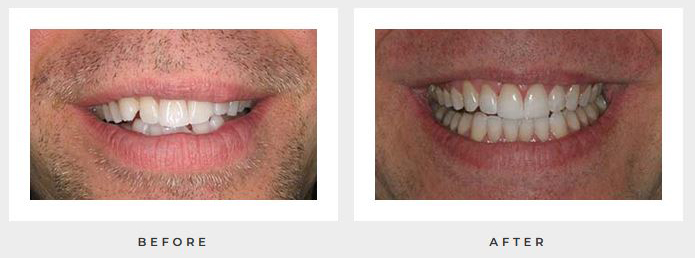
For a teenager who is still growing, dental bonding is the preferred option for minor chipped teeth. When a large portion of a tooth is missing, a dentist will x-ray it for internal damage and determine whether the tooth needs a dental crown to protect it. A skilled cosmetic dentist can conceal the chips with these steps:
- Clean the teeth
- Roughen the surfaces
- Etch the teeth and apply a bonding agent
- Select and blend dental composites that match the teeth
- Apply and shape layers of composite on each tooth
- Harden the composite
- Reshape and polish the composite to match the surrounding natural teeth
Cosmetic dentists can restore chipped teeth with dental bonding while patients sit in the dental chair. Bonding strengthens teeth because, according to the American Dental Association, tooth enamel and bonding fuse. The seamless bond will look completely natural.
How Long Will Dental Bonding Last?
Quality dental bonding placed by a cosmetic dentist lasts an average of five years. As the bonding wears, a dentist will eventually need to replace it. If your daughter takes care of the bonding and sees a cosmetic dentist to refresh it and remove stains.
What About Porcelain Veneers for Teenagers?
Porcelain veneers can restore chipped teeth, but dental bonding is more practical for a growing teenager whose jaw is still growing. A dentist would need to replace the veneers when the jaw and tooth are complete, and each veneer costs over $1,000.
Will Dental Insurance Pay to Repair a Chipped Tooth?
Although dental insurance will not cover the entire cost of dental bonding, it may provide some coverage. Contact your dental insurance company to ask about plan benefits.
Schedule a consultation with a cosmetic dentist who treats children.
Rocky Hill, Connecticut, cosmetic dentist Dr. Thaddeus Michalski sponsors this post.