


Month: August 2026 posts
Why Does My Face Look Different After All-on-4 Dental Implants?
Since having All-on-4 dental implant surgery at a large implant chain, I’ve noticed changes in my face. My cheeks are more sunken, my skin seems to sag, and my upper lip turns downward. The area below my eyes looks hollow, the distance between my nose and upper lip seems longer, and one nostril has partially collapsed. The changes were not gradual. I noticed them after the surgery. The doctors haven’t explained what may have happened. Could the implant surgery have caused these changes, and if so, how? – Thanks. Himari from NY
Himari,
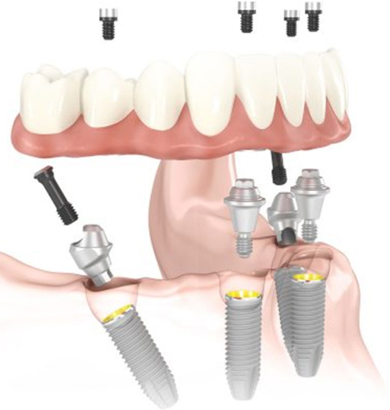
While we can’t reach conclusions without an examination, the concerns you described with your All-on-4 implant-supported denture deserve careful attention.
Dental treatment affects far more than teeth alone. Restoring missing teeth also restores support for the lips, cheeks, and lower face. When that support is recreated properly, many patients notice a healthier, fuller, and even more youthful appearance.
Are You Experiencing Facial Collapse?
Implant-supported dentures are generally intended to prevent or correct the facial collapse that often develops after teeth have been missing for many years. They normally restore facial height and provide support that helps fill out the cheeks.
If the denture does not provide enough width or vertical support, facial tissues may appear less supported than expected. That can change facial contours even when the implants themselves are successful.
Could Surgery Have Changed the Nose or Upper Lip?
Preparing the jaw for implant-supported dentures often requires reshaping portions of the bone. In the upper jaw, that bone lies directly beneath the nose.
Although every patient’s anatomy is different, extensive bone reduction in this area could influence the appearance of your upper lip or nose.
How Should You Proceed?
Patients who notice major changes in their appearance should not feel they have to accept the result. An open discussion with the treating practice can help determine whether improvements are possible.
The conversation should include questions such as:
- Can the dentures be redesigned for better cheek support?
- Is the vertical height of the bite appropriate?
- Would a wider smile improve facial fullness?
- Are additional treatment options available to improve facial appearance?
While restoring bone after surgical reduction may not always be straightforward, modifying or remaking the prosthesis may improve your facial support. If you still have questions after a meeting with the treating dentist, get a second opinion from a dentist experienced in implant-supported dentures.
Dr. Thaddeus Michalski, a Rocky Hill, Connecticut dentist, sponsors this post. Read why many of his patients say he is one of the best dentists in town.
Should I Get a Dental Implant or Try to Save My Tooth with Repeat Root Canal?
Is it worth it to save an upper molar tooth with a repeat root canal, or should I get it removed? – Thanks. Colston from NJ
Colston,
Losing upper molars without replacing them can create long-term problems, even later in life. If upper molars are extracted and left unreplaced, the lower molars can gradually drift upward into the empty space. This can change the way the teeth fit together and affect the bite. Even if that doesn’t happen, chewing may become limited to one side of the mouth, placing extra stress on those teeth and muscles.
For that reason, any discussion about extracting these teeth should also include a plan for replacing them.
How Do Dental Implants Compare with Root Canal Treatment?
If a tooth is savable, then comparing implants with root canal treatment becomes worthwhile. Whenever a healthy tooth can reasonably be preserved, many dentists believe saving the natural tooth is the better choice.
Both treatments have excellent long-term success rates. Modern root canal treatment, particularly when performed by an endodontist using current technology, is very reliable. Dental implants are also highly successful and may have a slightly lower risk of failure. However, if an implant does fail, correcting the problem is usually much more involved, often requiring additional surgery and bone grafting.
Cost is another important consideration. In many cases, a root canal and crown cost about two-thirds as much as an implant and crown.
What Are the Pros and Cons of a Dental Implant vs. a Root Canal?
Choosing between these treatments involves more than looking at success rates alone. Recovery time, cost, and future treatment needs all deserve consideration.
Dental Implant and Crown
- Typically costs about 50% more than a root canal and crown
- Requires at least three months for the implant to fuse with the jawbone before the final crown is placed
- May be slightly more reliable over the long term
- Can be much more complicated and expensive to repair if it fails
Root Canal and Crown
- Generally costs less
- Can often be completed in two or three weeks over several appointments
- Has a small risk of future failure, which could require replacing the tooth with an implant later
- Preserves the natural tooth without placing an artificial fixture into the jawbone
Are Your Teeth Likely to Need Root Canals?
You haven’t mentioned unusual sensitivity or other symptoms that would suggest the your tooth is close to needing root canal treatment. While there is always a small possibility that a tooth receiving a crown could eventually require a root canal, the risk appears low.
Removing healthy teeth simply because they might need root canal treatment in the future is difficult to justify. A more conservative approach would be to place the crowns and monitor the teeth. Even if one or both eventually require root canal treatment—which would be an uncommon outcome—preserving the natural teeth would still offer important advantages over extracting and replacing them with implants.
Dr. Thaddeus Michalski, a Rocky Hill, Connecticut dentist, sponsors this post. Read why many of his patients say he is the best dentist in town.