


What Are the Types of Bone Grafting for Dental Implants?
Successful dental implant placement requires sufficient jawbone volume because your bone is the foundation for dental implants. When a tooth is missing, your body resorbs the surrounding bone and uses the minerals elsewhere in the body. If you have experienced jawbone shrinkage, you may need bone grafting to build up the bone before you get dental implants.
What Are the Types of Dental Implant Bone Grafting?
Types of bone grafting for dental implants include your bone, tissue-bank human bone, animal bone, mineral bone, and synthetic bone manufactured from proteins in the body.
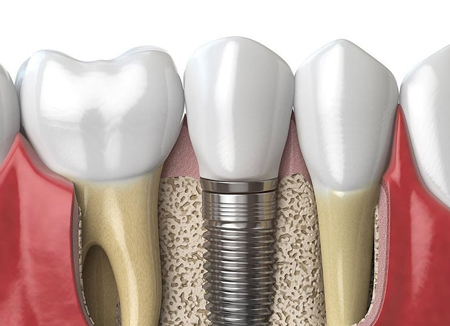
- Your bone (autograft) – Your chin, hip, jaw, or tibia can be a source of bone for grafting into your jawbone. Harvesting bone from another site requires surgery. Some implant dentists or oral surgeons harvest tibia bone in the office while you are under IV sedation. Harvesting bone from your hip requires hospitalization. Autografts are the most effective bone grafting because your body adapts quickly.
- Tissue bank human bone (allograft) – Reputable tissue banks supply human cadaver bone. Tissue bank grafting is less expensive than autograft. Although tissue banks screen donors, you will have the risk of infection from donor tissue, as with a blood transfusion.
- Animal bone (xenograft) – Sterilized animal bone—most often from a cow—minimizes the risk of infection. Your body absorbs the bone over time and replaces it with your bone.
- Mineral bone substitute (alloplast) – Next to bone harvested from your body, synthetic bone is the safest means of grafting. Your body will eventually absorb and replace the bone with your bone tissue.
- Recombinant gene technology-derived protein – Proteins naturally found in the body are used to manufacture bone synthetically. The protein is FDA approved as an alternative to an autograft.
How Long Is Dental Implant Bone Graft Healing Time?
The bone grafting healing period can take four to nine months, depending on the graft used and how your body reacts to it. After it heals, your dentist or oral surgeon will perform dental implant surgery. In some cases, such as with tooth extractions, you may receive bone grafting and implants on the same day. Your implant dentist will explain your options for bone grafting and the outcome you can expect.
Rocky Hill, Connecticut dentist Dr. Thaddeus Michalski, sponsors this post.
Should I Get a Root Canal or an Extraction?
I need a root canal or extraction and implant for my lower right first molar. The tooth behind it is missing, too. I can only afford to replace one tooth at a time, so I am replacing the one that shows the most when I smile. My dentist gave me the option of a root canal or an implant. I am a little concerned about the root canal, and if something goes wrong, I will need an implant anyway. Which option makes sense? Peter from Orange, NJ
Peter,
Thank you for your question.
Dr. Michalski would need to examine your tooth and x-ray to explain precise treatment options, but we will explain some basic principles for saving or replacing missing teeth.
Root Canal or Extraction?
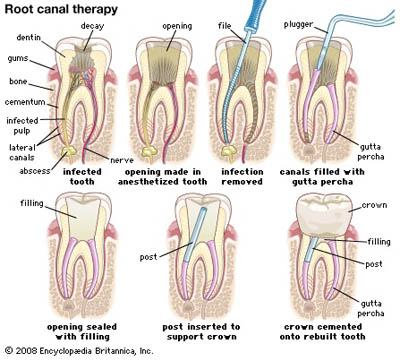 Saving a natural tooth with root canal treatment makes sense. Your tooth will need a crown to protect it. The American Association of Endodontics (root canal specialists) recommends that you choose root canal treatment over an extraction and dental implant whenever the tooth is savable. Root canal procedures have a 97 percent success rate. Also, when you are missing molar teeth and do not try to save or replace them, you will have difficulty chewing food well enough to digest it properly.
Although a dental implant is a safe, predictable way to replace a tooth, no form of tooth replacement is better than a natural tooth.
Is a Root Canal Painful?
Root canal therapy is not painful when you select an experienced dentist for treatment. A gentle dentist will take these steps to ensure you are comfortable:
- Explain options for sedation before your procedure date if you have dental anxiety
- Apply a local anesthetic to prevent you from feeling the numbing injection
- Numb the root canal tooth
- Remove the infected tooth pulp, sanitize the tooth, and fill it with a dental material
- Explain how to minimize your discomfort with medication at home
Schedule a Second Opinion
We recommend scheduling a second opinion with an experienced dentist to discuss your options. Eventually, you will need an exam and x-rays to assess your oral health and get an accurate diagnosis and treatment options.
Rocky Hill, Connecticut dentist Dr. Thaddeus Michalski, sponsors this post.
How Can I Find Affordable Implants for My Pop-Up Denture?
I got a bum pop-up denture from a dental school. I won’t say which school it came from, but now I know I should never have gone the cheap route. The bottom denture pops up whenever I move my tongue, yawn, or cough. I press it back down, and it pops up again. I want to be furious, but I am disappointed with myself for choosing the school. I don’t have much money, but neither am I broke. A friend recommended his dentist, but I chose the dental school figuring the instructors were supervising and I could get a good deal. Now I need affordable implants to hold the denture down. Where do I start? – Thomas from NJ
Thomas – Thank you for your question. We are glad that you are seeking professional advice before getting dental implants. Please begin by avoiding looking for a bargain or the cheapest implants.
How Can You Get Affordable Implants for an Existing Denture?
You may find affordable implants for an existing denture by scheduling a consultation with a skilled implant dentist. The dentist will examine your denture to determine why it lifts and whether the dentist can fit it for implants. Depending on the condition and quality of your denture, a dentist may be able to refit it, or you may need a new denture.
Qualifying for dental implants
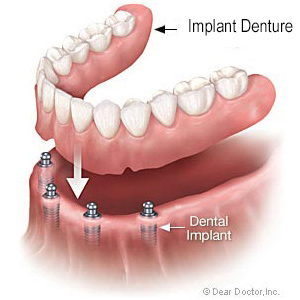 Before placing dental implants, a qualified implant dentist will take a 3-D CT scan to see your oral anatomy and bone volume. If you have worn dentures for years, you may have some bone shrinkage. The dentist will determine whether you have enough bone volume or need a bone graft to support the implants. You will get a customized treatment plan to ensure the dentist places your implants precisely and the dentures fit the implants securely.
Getting Dental Implants that Fit Your Denture
After implant surgery, you will wear temporary replacement teeth. In three to four months, your jawbone and implants will fuse. Your implant dentist will take impressions of your mouth to ensure your existing or new denture fits your implants securely.
Expect to pay well for high-quality dentures and implants. Thorough, well-planned implant-supported dentures take time and skill. With patience and a good implant dentist, your frustration will change to satisfaction when you receive a stable, natural-looking smile.
Schedule a consultation with one or two advanced implant dentists to discuss your options and how to make treatment affordable.
Dr. Thaddeus Michalski, a Rocky Hill, Connecticut dentist and Diplomate of the International Congress of Oral Implantologist, sponsors this post.
What Can I Do About a Loose Dental Implant?
My dentist placed three implants in January, and now one of them is loose. I am concerned about what went wrong and am losing trust in my dentist. What options might a dentist give me for fixing a loose dental implant? Thank you. Manal from Seattle
Manal,
Thank you for contacting our office. Although Dr. Michalski would need to examine your implant, we can explain factors that affect treatment for a lose implant.
What Can You Do About a Loose Dental Implant?
If your dental implant is loose, you should promptly contact your implant dentist, oral surgeon, or periodontist. Your doctor will examine the implant parts and gum tissue and take a 3-D CT scan of your bone to identify why your implant is loose. Your doctor will recommend treatment based on the cause of the loose implant.
Why Get Prompt Treatment for a Loose Implant?
You should get prompt treatment for a loose dental implant because it is a threat to your oral health. Without treatment, an infection can develop and worsen. If there is any chance of saving the implant, delaying treatment will result in dental implant failure. Implant parts include an artificial root, an abutment (connector), and a dental crown. Although dental implants have a 95 percent success rate, an untreated loose implant will fail.
What Causes a Loose Dental Implant?
Faulty implant parts, gum disease, implant location, failed osseointegration (fusion of the implant and bone), and other factors can contribute to a loose dental implant. But you will need an exam from your doctor to determine the culprit.
- Implant quality, type, or size – Faulty design of the artificial root or abutment or using the wrong implant type or size can weaken and loosen it.
- Implant location – If an implant is not in the optimal place, it can loosen.
- Insufficient torque – If your doctor does not sufficiently secure the implant in your bone, it can loosen.
- Lack of bone volume – Areas of low bone volume will not support an implant.
- Gum disease – Diseased gum tissue destroys bone tissue and leaves implants without support.
- Stress on the implant – Prematurely attaching replacement teeth to implants can loosen them. Also, failure to maintain a soft-food diet can disturb implant sites and cause looseness.
- Failed osseointegration – Implants will be unstable if the jawbone and implant do not fuse.
What Is the Treatment for a Loose Dental Implant?
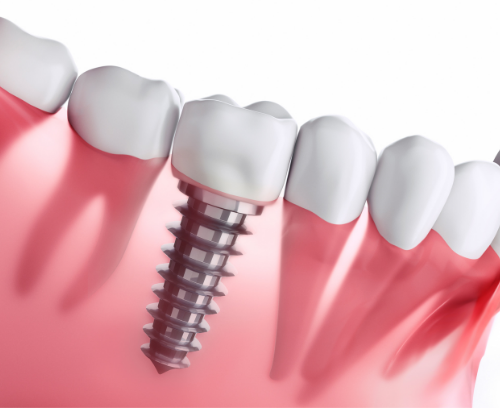 Treatment for a loose dental implant depends on the cause of looseness. Your doctor will examine the implant site and take a 3-D CT scan to examine your bone structure. Your treatment may include:
- Implant removal
- Gum disease treatment
- Bone graft
- Three to four months of healing
- Replacing the implant, possibly in a new position
- Alternative treatment
A skilled implant dentist can restore your oral health and help your dental implants succeed with proper planning.
Dr. Thaddeus Michalski, a Rocky Hill, Connecticut dentist and Diplomate of the International Congress of Oral Implantologist, sponsors this post.
Implant-Supported Dentures in Rocky Hill for a More Secure Smile
 If you’ve been dealing with the troubles of tooth loss, or if you’re a denture wearer and are tired of the hassle, then consider all of the advantages of implant-supported dentures. In Rocky Hill, Dr. Michalski offers this exceptional prosthetic device to replace missing teeth. Implant-supported dentures offer the beauty of a smile from full dentures and the stability of surgically set dental implants. They are much more secure than removable dentures that simply rest on top of your gums.
Are Dental Implants in Rocky Hill Right for You?
 It is estimated, more than 178 million Americans live with one or more missing teeth. With missing teeth significantly decreasing your oral health and quality of life, you need an effective solution for tooth replacement. Dental implants in Rocky Hill are a permanent option to replace missing teeth with a success rate of over 95 percent. Dental implants are the only form of tooth replacement that most closely looks and functions like natural teeth. While dental implants are effective, there are certain things to consider before making the choice to replace your teeth with dental implants.
(more…)
Considering Dental Implants in Rocky Hill
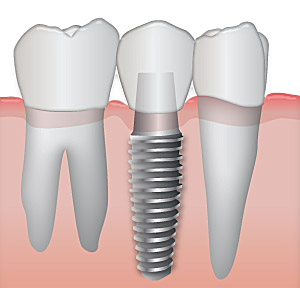 Until dental implants came into common use during the 1960s, dentures or bridges were the only options people had for replacing missing teeth. Although these are both aesthetically attractive, they could not offer a long-term solution for tooth loss. These types of prostheses can only be expected to last five to 10 years before needing to be replaced. However, with dental implants, Rocky Hill dentist Dr. Thaddeus Michalski provides a permanent solution for missing teeth.
Dental Implants in Rocky Hill: A Good Choice for You?
When you’ve got gaps in your smile, you’re not only missing teeth. You’re also missing out on some of the best parts of life: eating, speaking and laughing with ease and confidence. Guess what? Dental implants in Rocky Hill are by far your best option in tooth replacement. Keep reading to learn whether or not you’re a good candidate today.
Dental Implants in Rocky Hill
Dr. Thaddeus Michalski, Your Implant Dentist in Rocky Hill
It may be due to the economy, or in response to supply and demand, but lately there have been a lot of dentists advertising dental implants and what the fee is for those implants. In some respects, we’d hope you wouldn’t shop for a dentist based solely on price, especially a surgical procedure, but I also operate with a budget and realize saving money is important and getting affordable dental implants is a worthwhile pursuit. So I’d thought I’d suggest a few things to look for and ask, when looking for a deal for dental implants.
The first thing is what exactly does the fee include. A dental implant to replace a missing tooth is comprised of 3 parts. Part 1 is the implant itself, it is placed in the bone and serves as the anchor for the new tooth. Part 2 is the abutment. The abutments is the connection between the implant and crown. The last part is the crown or the tooth. Ask if the fee includes all 3 parts. Some fees I have seen advertised include only the implant.
What kind of training does the dentist or surgeon have? Did they learn in a weekend course and have placed only a few? Dental implants are very predictable when done well, but have the potential for complications if not done well.
Another thing to know is does the fee include any bone grafting that may be needed. If there is not an adequate width or height of bone a bone graft may be needed. This requires an examination, and x-rays to decide if a bone graft might be needed. The fee may or may not include any bone grafting.
What kind of abutment or connection between the crown and implant is planned? A stock abutment is a one-size fits all abutment. A custom abutment is custom-made. Custom abutments are more expensive, but can make the difference between making the tooth look and feel real. One of the challenges with dental implants is the area where the implant comes out from the gums. Often times there is a space there and food will get caught. In the front, a space there can make the new implant tooth look fake. A custom abutment can resolve many of these potential problems. Sometimes a stock abutment will work great. Sometimes you can’t decided which will be better, until after the implant is placed and it has healed. You should know going in what the fee will include.
Does the fee include a temporary to wear while waiting for the implant to heal? Sometimes you can go without a temporary, and sometimes you need a temporary to shape the gum tissues during healing so that your new implant tooth looks real.
Where are the parts from? You can get parts from China to the United States. Maybe you care maybe and maybe you don’t. The lab fee’s for the crown can range from less than $100 to close to $500 or more. The difference is in the materials used, the skill of the technician.
Do you even need an implant? Maybe a specialist could save your tooth with crown lengthening or orthodontic extrusion or retreatment of a root canal and maybe not. Maybe you might be better served with a bridge or a removable partial denture. Maybe you don’t even need to replace the tooth, because you don’t need it. That’s a lot of maybes.
The point is it’s tough to say you can replace your tooth for $900 from a phone conversation or an advertisement. There’s a lot more that goes into making the decision to what will be needed and the potential for the fees to be much more. Avoid surprises and know going in what you’re getting into. Dental implants are an excellent way to replace a missing tooth or one that will be missing soon. Good luck in your efforts to replace your tooth and restore your smile.
Thaddeus Michalski is a dentist in Rocky Hill, CT. He places and restores implants. Dr. Michalski has been placing implants for 13 years.