


Why Are My Dental Crowns the Wrong Color?
My dental crowns are the wrong color. They looked lighter in the dental office. The crowns are for my center front teeth and left incisor. When I was in the dental office, the crowns looked like they matched my other teeth perfectly, so I agreed that my dentist could cement them on. Fortunately, they fit well, and I don’t have any problems with my bite. When I got home, I looked at them in the mirror. The crowns looked like they had a grayish-blue tint and did not match my teeth. I went outside and looked in the mirror but still saw the tint that I did not see in the dental office. I’m confused. Thanks. Tammi
Tammi,
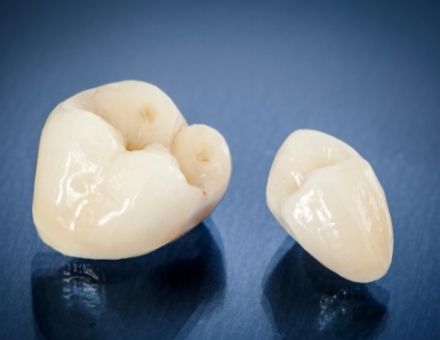 Did your dentist use a try-in paste between the crowns and the teeth beneath them, or were the heights dry?
We ask because if your dentist placed the crowns on your teeth without a try-in paste, they do not transmit the underlying tooth color as they would with a bonding material between the crowns and teeth. A grayish-blue tint can result from a stain or a metal post in a tooth. Some cosmetic dentists use clear glycerin during the try-in to mimic the crown color after it is cemented to a tooth.
Another possibility is metamerism, which means that the color of certain materials varies with the type of light, such as fluorescent light versus daylight. However, high-quality, clear bonding cement does not change color when the dentist cures it by attaching the dental crown to your tooth.
We recommend taking pictures of your teeth in various lighting to show to your dentist. Ask friends or family if they can see the color difference between your new crowns and surrounding natural teeth. Talk to your dentist about your concerns and ask how you can work together to resolve them.
If your dentist’s attempts are unsuccessful, consult an advanced cosmetic dentist for a second opinion.
It is good that your crowns fit well and are not disrupting your bite, contributing to jaw pain and other TMJ concerns. We hope you get a resolution for the color mismatch.
Rocky Hill, Connecticut, cosmetic dentist Dr. Thaddeus Michalski sponsors this post. Read how he strives to provide patients with some of the best dental care in Rocky Hill.
I Didn’t Have TMJ Until I Went to the Dentist
Although my teeth were in bad shape because I hadn’t been to a dentist in three years, I didn’t have TMJ until after my dental appointment. I saw a new dentist in September 2022. After an exam and x-rays, I agreed to gum disease treatment, fillings for a few teeth, and four dental crowns. I got the crowns in early December and have had trouble with them since then. The dentist keeps adjusting my bite but can’t seem to get it right. I have jaw pain on the right side of my mouth, and chewing on that side is uncomfortable. I think this dentist created a new problem and asking me to wear a mouthguard at night is an insult. I am worried that my bite will be off forever. I took a break from the dentist to think about what to do next. Can my TMJ problems be reversed? Thanks. Kenneth from Spokane, WA
Kenneth,
You had a lot of work on your teeth, so we understand your concerns.
Did Dental Treatment Cause TMJ?
Dental treatment does not usually cause TMJ. If you have long dental appointments, your jaw muscles can get sore from being open. If you feel muscle soreness only, applying warm towels on your face will relieve your temporary discomfort.
Jaw Muscle Soreness from Dental Crowns
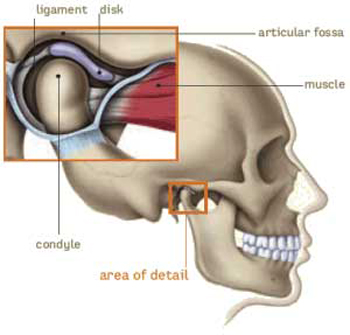
If your jaw muscles are sore from dental crowns, your bite is off. It takes skill and advanced training in occlusion and bite (the way your upper and lower teeth meet.) Your soreness and other symptoms will persist until you find a dentist to correct your bite.
If a dentist cannot adjust your bite with crowns, the problem may be related to one or more of these factors:
- Inaccurate impressions of your teeth
- Aggressively preparing your teeth for crowns
- Faulty bonding techniques with the crowns
- Poorly constructed crowns
We recommend scheduling a consultation with an advanced cosmetic dentist with TMJ training to examine your teeth and crowns and identify the source of your discomfort.
Rocky Hill, Connecticut, cosmetic dentist Dr. Thaddeus Michalski sponsors this post.