


What Are My Options for Missing Front Teeth?
I won’t get into my embarrassing story about how I lost my two front teeth. What are my options for replacing them? I don’t have a regular dentist, so I want to find out the options before seeing a dentist who might try to take advantage of my situation. Thanks, J.S. from Zanesville, OH
J.S.– Your options for replacing the teeth are a partial denture, a dental bridge, or dental implants.
An implant dentist will evaluate your medical and dental history and complete an oral exam and x-rays before recommending treatment. Your front teeth are involved, so you want a dentist with an artistic approach. We suggest finding an experienced implant dentist who is also a creative cosmetic dentist because they will be well-qualified to perform either procedure.
Options for Replacing Missing Front Teeth

Options for replacing missing front teeth include a partial denture, a dental bridge, or an implant.
- Partial denture – It is the least expensive option. A dental lab will embed replacement teeth in a plastic base. The appliance clasps onto adjacent teeth. The clasps will stress your neighboring teeth over time.
- A dental bridge – A series of connected crowns replace your missing teeth. It requires shaving down the tooth on either side of the missing ones to accommodate the crown. The replacement tooth will be suspended between the two crowns. You can get beautiful crowns crafted to look like your natural teeth from a cosmetic dentist.
- Dental implant – This option requires no work on your adjacent teeth. An implant dentist or oral surgeon places implant screws in your jawbone. When the jawbone heals around the implants, your dentist will attach crowns. Implants can withstand biting forces, look natural, and can last 15 years or longer.
We recommend scheduling consultations with two cosmetic dentists to get their recommendations and compare your options. Talk to each dentist about your anxiety and ask about sedation options during your visits. Be sure to have the work completed by a cosmetic with advanced implant training or who partners with an oral surgeon. You will get natural-looking results.
Dr. Thaddeus Michalski, a Rocky Hill, Connecticut dentist and Diplomate of the International Congress of Oral Implantologists, sponsors this post.
What If Local Anesthetic from the Dentist Doesn’t Work?
My 20-year-old daughter had a dental appointment last week, and the numbing shot did not work. Days before the appointment, she kept saying she was not looking forward to it. This is because getting her numb is always a problem, and we keep rescheduling her appointments. I wonder if we need to switch to another dentist. She doesn’t like needles anyway, but they keep giving her shot after shot, which doesn’t work. What do you suggest? Thanks! – Yvette
Yvette –
Thank you for contacting Radiant Smiles of Rocky Hill. Your daughter’s comments about not looking forward to her dental appointment and not getting numb suggest that she has dental anxiety.
What If Local Anesthetic from the Dentist Doesn’t Work?
If local anesthetic from the dentist does not work, it could be that the patient is unable to relax. Sometimes, a high level of anxiety blocks the effectiveness of Lidocaine. If your daughter’s anxiety level is exceptionally high, a dentist may be unsuccessful in numbing treatment areas without administering dental sedation.
Also, a dentist’s technique or the type of anesthetic may not work well for the patient.
How Does Dental Sedation Help Local Anesthesia Work?

Dental sedation helps local anesthesia work because it relaxes you and calms anxiety. Also, sedation minimizes your pain sensitivity. Even patients without dental anxiety benefit from sedation because they are so relaxed that a dentist can complete more work than without sedation.
Schedule a Consultation
We recommend scheduling a consultation with an experienced dentist who understands dental anxieties and offers sedation. Your daughter can explain the causes of her fear and what triggers it in a dental office. An attentive dental team will note your daughter’s triggers and work to avoid them during the appointment.
Other than dental anxiety, some rare medical conditions can minimize the effectiveness of local anesthesia. If you get a second opinion and the new dentist cannot resolve your daughter’s concerns, you can ask her medical doctor for advice.
Rocky Hill, Connecticut, dentist Dr. Thaddeus Michalski sponsors this post.
How Long Will It Take to Get Implant Overdentures?
I am anxious about how long it will take to get implant overdnetures. My teeth have deteriorated so much over the past five years that my dentist referred me to a periodontist. Only two of my teeth are worth saving. But my gum disease is so advanced that I decided to go with dentures. I am 62 years old, so the perio told me about dental implants. She was not pushy at all. She just explained how implants might help me. Although I am still deciding, I think I will go with four dental implants for an overdenture. I have not talked to my dentist or the periodontist about my anxiety level. The older I get, the more anxious I become. Although I didn’t fear dental implants in the past, the thought of extractions, possible bone grafting, and implant surgery sometimes causes me to panic. I just want it to be over. I realize that your office is not a specialty office. But can you give me an idea of how much dental work I can get done in one sitting? Thank you. Esther from Nashville
Esther,
How much dental work a dentist or periodontist will do in one sitting depends on several factors, including the patient’s tolerance, the work to be completed, and whether you receive sedation.
How Long Does It Take to Get Implant Overdentures?
How long it takes to get implant overdentures depends on several factors, including tooth removal, gum and bone health, the number of implants you receive, your health and tolerance, and the specialist’s judgment.
- Tooth removal – If your periodontist must remove teeth before implant placement, it will lengthen treatment time. Sometimes after tooth removal, a periodontist must build up your bone before placing implants.
- Gum health – A periodontist will ensure your gums are healthy before placing dental implants. She will treat your gum disease first. Gum disease can lead to jawbone loss, and healthy bone is a requirement for dental implants.
- Bone health – Besides healthy bone, you need enough bone volume to support dental implants. If you lack jawbone volume, a periodontist will recommend bone grafting to anchor your dental implants. Otherwise, the implants can loosen and fail. After bone grafting, your periodontist may wait three to four months before placing implants.
- How many implants you receive – An oral surgeon or periodontist places one dental implant at a time. The more implants you receive, the longer the surgery will take. Each implant can take one to two hours to place.
- Your final implant denture – You will wear a temporary denture until your implants and jawbone fuse. And that can take about four months. Afterward, your dentist will secure the final denture to the implants.
How Sedation Dentistry Affects Your Dental Work
When you receive implant overdentures or any dental work, sedation dentistry will help you relax throughout the procedure. Even if you do not have dental anxiety, sedation helps a dentist complete more work than they could without giving you sedation.
After an examination and 3-D x-rays, your periodontist will make a treatment plan. They will explain how much dental work you can expect for each appointment. But sedation dentistry will alleviate your anxiety during each dental visit.
Rocky Hill, Connecticut, dentist Dr. Thaddeus Michalski, sponsors this post.
Why Do I Have a Cavity Beneath My First Molar Crown?
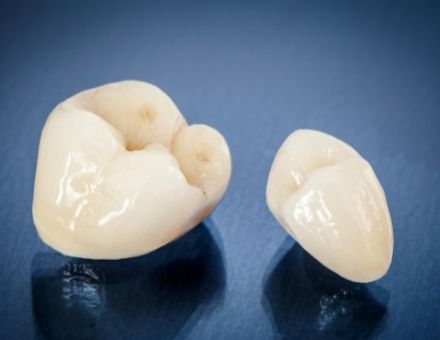
I received three dental crowns in 2019. After my yearly exam, x-rays, and cleaning last week, my dentist said that the top left first molar crown has a cavity beneath it. I regret not getting a second opinion because last year, I mentioned to my dentist that I had a toothache on and off in the tooth, but she didn’t pursue it. Why do I have a cavity beneath a crown? I had a challenging appointment due to anxiety when I got the crowns, and I don’t want to think about getting a new one. Thanks. Elyssa from Arlington, VA
Elyssa,
It is unusual to find decay beneath a relatively new crown. Dr. Michalski would need to examine your crown and x-rays, but we will explain how decay can develop.
Why Do You Have a Cavity Beneath a Dental Crown?
Two reasons you may have a cavity beneath a dental crown include your dental history and the crown placement.
- Your dental history – People with a history of cavities may develop decay beneath a dental crown.
- The crown placement – If the margin where your crown and tooth meet is not smooth or has gaps, bacteria, plaque, and decay can thrive. If your dentist does not detect decay during your yearly exams and x-rays, the decay will progress, and you will begin to feel sensitivity and pain.
How Long Do Dental Crowns Last?
A well-made and precisely placed dental crown can last five to ten years. Insurance companies will not provide benefits for a replacement crown fewer than five years old. Most cosmetic dentists would be embarrassed to find decay beneath a crown they placed.
We recommend finding an advanced cosmetic dentist to examine your tooth, crown, and x-rays.
Will You Need a New Dental Crown?
If you have a cavity beneath a dental crown, a dentist must remove the crown and cavity. You may need a new crown. When you get a second opinion, ask the dentist about sedation options to help you relax during your procedure.
Dr. Thaddeus Michalski, a Rocky Hill, Connecticut dentist and Diplomate of the International Congress of Oral Implantologist, sponsors this post.