


Category: Root Canal posts
What Causes Severe Pain After a Root Canal?
I had a root canal followed by a crown in March 2018. A few weeks later, I began having pain in the tooth. My dentist took an X-ray but couldn’t find a crack or anything else that explained the pain. In August, my dentist referred me to an endodontist who prescribed antibiotics.
The pain had mostly gone away when I saw the endodontist, who told me it should keep improving, and for a while it did. I even went on vacation without any problems.
Then, a few days ago, I suddenly developed a severe toothache. The endodontist prescribed steroids, but I’m still having intense throbbing and pulsing pain. Why would a root canal tooth start hurting this badly again? – Thanks. Judah
Judah,
Several weeks after treatment, post-treatment inflammation is unlikely to cause this level of pain. Your history of improving pain and then returning may suggest that something inside or around the tooth still needs attention.
Steroids reduce inflammation very effectively. Immediately after a root canal, this can sometimes be helpful because the tissues around the root may become irritated during treatment.
Several things can contribute to this early irritation:
- Debris from inside the tooth can pass beyond the root tip
- Disinfecting or filling materials can irritate the surrounding tissue
- Instruments used to clean the canals can sometimes extend slightly beyond the root
- Swelling can make the tooth hit harder when you bite, creating additional irritation
In selected cases, steroids can help break this cycle. However, they also suppress part of the body’s inflammatory and immune response.
Why Is the Timing of Your Pain Important?
A flare-up weeks after a root canal is different from soreness immediately after treatment. The delay makes it less likely that procedure-related irritation is the cause.
Your pain improved after the endodontist prescribed antibiotics in August. That response, along with the timing of your symptoms, makes us concerned about infection. However, you need an exam for an accurate diagnosis.
Unfortunately, root canal anatomy can be complicated. A tooth may have narrow branches, unusual canal shapes, or areas that are extremely difficult to clean and seal completely. Bacteria that persist in one of these areas can cause symptoms to return later.
Why Did the Tooth Start Hurting Again?
Recurring pain suggests that the source of the problem may still be present. Antibiotics can sometimes calm an infection temporarily, but they don’t remove bacteria from an untreated or inadequately sealed root canal system.
Another severe flare-up deserves further investigation rather than assuming the tooth needs more time to settle down. With the throbbing and pulsing pain you describe, we would want an endodontist to determine whether there is persistent infection or another cause that requires treatment.
What If the Root Canal Needs Additional Treatment?
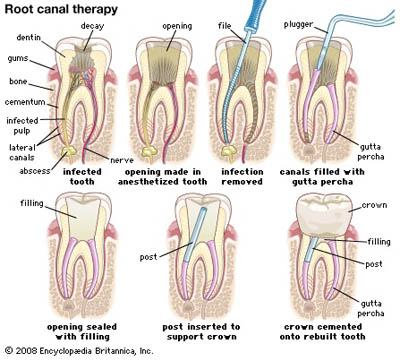
The next step should be a careful endodontic evaluation. Additional X-rays or three-dimensional imaging may sometimes help identify anatomy or other problems that conventional X-rays do not show.
Depending on those findings, your options may include:
- Retreatment of the root canal
- Root-end surgery if conventional retreatment cannot resolve the problem
- Extraction if saving the tooth is not practical
The best treatment depends on the tooth’s condition, its roots, the existing crown, and the cause of the recurring symptoms.
Will the Crown Interfere with Another Root Canal?
The crown can make retreatment somewhat more complicated, but it does not necessarily prevent it. An endodontist can often make a small opening through the tooth’s crown to reach the canals.
With your pain severity, we suggest getting another endodontic evaluation promptly. You need a clear diagnosis of why the tooth flared up again and a treatment plan that addresses the underlying cause.
Dr. Thaddeus Michalski, a Rocky Hill, Connecticut dentist, sponsors this post.
Does a Tooth Abscess Require an Apicoectomy?
I’ve had a chronic abscess above my top right second molar. My dentist has watched the abscess to ensure it doesn’t grow or cause discomfort. Two weeks ago, my dentist surprised me and recommended that I see an endodontist for a root canal. The endodontist recommended an apicoectomy to ensure I do not have an abscess. I read about the procedure, and I think it’s too aggressive. Is there an alternative to the apicoectomy? What if it’s not a cyst? Thanks. Hannah from NM
Hannah,
Although dental schools teach dentists about cysts and the complications they can cause, most dentists rarely see true cysts in everyday practice. Some dentists also tend to magnify the risks so patients understand the risks and the dentist is protected if complications arise.
Is This Swelling Likely a Cyst?
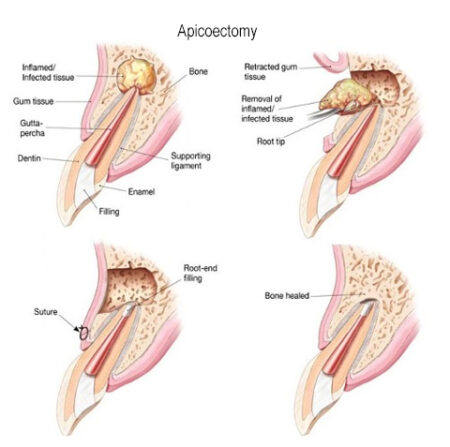
Swelling could involve a cyst, but the odds are relatively low. In most cases, swelling comes from a chronic dental infection. Root canal therapy is usually the more conservative and appropriate first step. An apicoectomy seems unnecessary at this stage.
Why Treat the Infection?
An ongoing abscess allows bacteria to enter your bloodstream repeatedly. Even when an infection does not cause severe pain, it can still affect your overall health and energy level.
After the root canal treatment, you may begin to feel better overall. Chronic dental infections often cause fatigue.
Is Root Canal Treatment Worth It?
In general, root canal treatment has a success rate of at least 85 percent. When an experienced dentist or endodontist uses modern technology and techniques, the success rate is often considerably higher.
Even if the root canal does not heal completely, you still have additional options later. At that point, your dentist or endodontist could consider the apicoectomy they mentioned. Starting with the more conservative treatment first usually makes sense.
Dr. Thaddeus Michalski, a Rocky Hill, Connecticut dentist, sponsors this post. Read why many of his patients say he is one of the best dentists in town.
Will I Regret Not Getting a Tooth Extraction and Dental Implant?
I had a root canal in 2020 without any problems until now. The tooth has hurt on and off for the past month, but now it’s starting to throb. I am afraid that I will need an extraction. Is it worth repeating a root canal, or would I regret not getting an extraction and a dental implant? – Thanks. Elias
Elias
Root canal failure can be frustrating and painful. It happens when a tooth doesn’t heal completely after a root canal treatment, leading to recurring symptoms. Your symptoms may be the result of root canal failure.
What Causes Root Canal Failure?
A hidden tooth infection or curvy tooth roots can contribute to root canal failure:
- Hidden infection: It can be challenging for a dentist to remove all the infection from a tooth’s complex root canals. Even a tiny amount of remaining bacteria can cause problems later.
- Curved or branching roots: These can make it hard to reach and clean all areas of the tooth.
What Are the Treatment Options for Root Canal Failure?
The treatment options for root canal failure are retreatment, root canal surgery, or extraction and a dental implant for an unsavable tooth.
- Retreatment: A dentist can attempt to clean the infected area and seal it again.
- Root canal surgery: A dentist or specialist must access the tip of a tooth near the gumline and through the bone to remove the infection. An endodontist (root canal specialist) typically performs this procedure (apicoectomy).
- Extraction for tooth fracture or an unsavable tooth: A crack in the tooth can also lead to pain and infection. Unfortunately, saving a tooth with a severe fracture can be challenging.
See a dentist with extensive root canal treatment experience or an endodontist to discuss your options.
Dr. Thaddeus Michalski, a Rocky Hill, Connecticut dentist sponsors this post.