


My Gums Are Inflamed and My Front-Tooth Crown Is Still Too Dark
After multiple attempts, my dentist still can’t get the color right for my front tooth. It’s still too dark. I’m concerned because my gums around the crown are inflamed. I want to tell my dentist which materials I prefer for a better match. What should I ask for? Thanks. Bethany from CT
Bethany,
Most dentists are skilled at function and repair, but only a few have the artistic eye needed to create natural-looking results. These dentists are proud of their work and typically showcase it in a smile gallery on their website. When evaluating a dentist, take time to review those photos for their beauty and naturalness.
Why Be Cautious About Affordable Dentistry?
If a dental practice’s website emphasizes affordability or being an insurance-friendly office, proceed with caution. High-quality cosmetic dentists usually avoid discount insurance networks. That’s because creating a beautiful smile requires the best materials, the best labs, and attention to detail that is impossible to achieve with deep insurance discounts. At most, excellent cosmetic dentists will work with one or two insurance plans, and many of the best avoid them altogether.
Which Porcelain Veneer or Crown Materials Are Best?
It’s natural to ask which dental crown or veneer material is best. However, an advanced cosmetic dentist can produce excellent results with a variety of quality materials, including:
- Layered zirconia
- max (lithium disilicate)
- Feldspathic porcelain
A skilled cosmetic dentist and a talented ceramist can make any of these look beautiful. Think of it like choosing an artist. You would judge them by the quality of their work, not the brand of paint used. The same is true here: focus on the artistry, not just the material.
Dr. Thaddeus Michalski, a Rocky Hill, Connecticut dentist, sponsors this post.

My Dark Front Tooth Still Shows Through the Crown
I’ve had three different crowns on my left front root canal tooth over the past ten years. The crowns didn’t wear out, but I was tired of seeing the darkness of the tooth show through the crown. I’ve tried to find a dentist to give me a crown that matches my right front tooth. I want to try again in September. Am I wasting my time? Thanks. Lydia from TN
Lydia,
Zirconia is the strongest ceramic material for crowns, but on its own, it’s not very aesthetic. To improve its appearance, it usually needs a porcelain layer. Still, the greater challenge is masking the dark underlying tooth.
Hiding a dark tooth color involves more than just material—it’s a technical process requiring teamwork between your dentist and the ceramist. Both professionals must be experienced in handling cases like this. The dentist’s job includes communicating the desired final color and accurately sharing the shade of the underlying tooth—usually with a high-quality photo. Skilled cosmetic dentists seek master ceramists capable of achieving high-level aesthetic work.
Avoiding an Opaque Dental Crown
A common pitfall is using too much opaquer, which leads to an unnatural, flat-white crown. The trick is to place the opaquer deep inside the crown, then layer translucent porcelain above it for a lifelike effect.
Look for an Advanced Cosmetic Dentist
Your dentist deserves credit for recommending a porcelain veneer for your other front tooth. It’s a much more conservative treatment than a full crown. Still, matching a veneer to a crown takes expertise. Only dentists and ceramists with advanced color-matching skills should attempt it.
Rocky Hill, CT, dentist Dr. Thaddeus Michalski sponsors this post. Read how he strives to give patients the best dental care in town.
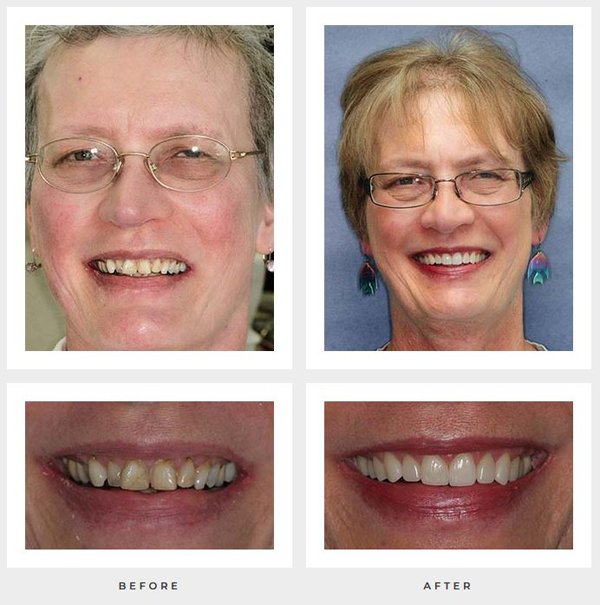
I Hate My Smile Because My Emax Crowns Are Too Thick
My new emax crowns are too thick. I hate my smile now. My dentist said they are thicker than usual because my gums are thick. I don’t like bulky teeth. They feel bulky, too. I complained about it, so now my dentist recommends trimming my gums. Why now instead of before? I’m nervous. Does her recommendation sound weird, or am I overreacting? – Thanks. Bristol from IN
Bristol,
You are not overreacting. Your concerns are valid.
When dental crowns are too thick, particularly where they meet the natural tooth, they can create an environment detrimental to gum health. The excess bulk allows harmful bacteria to flourish. Microscopic food particles become trapped, and thorough cleaning is often impossible, resulting in gum inflammation and disease.
It’s a misconception that thicker gums require thicker crowns. However, this is not a recognized aesthetic or clinical principle. Instead, a dentist must achieve a natural emergence angle for the crown, ensuring a smooth, straight contour from the tooth’s root onto the crown itself. There should be no bulges when a dental instrument is traced along this path.
Addressing e.max Crowns and Ensuring Quality Outcomes
Removing e.max crowns made from lithium disilicate, grinding them off with a series of diamond burs. A dentist familiar with this process can remove the crowns without damaging your existing teeth.
Furthermore, a key aspect of quality cosmetic dentistry involves ensuring patient satisfaction before final treatment decisions. Experienced cosmetic dentists provide a preview. This might be through a temporary plastic mock-up of the new smile or by temporarily cementing the crowns, allowing you to evaluate and approve the new look before permanent bonding.
We recommend looking for cosmetic dentists with extensive post-graduate training and credentials. Schedule consultations with two cosmetic dentists to discuss your treatment options.
Dr. Thaddeus Michalski, a Rocky Hill, Connecticut dentist sponsors this post.
My Dental Crown Cracked
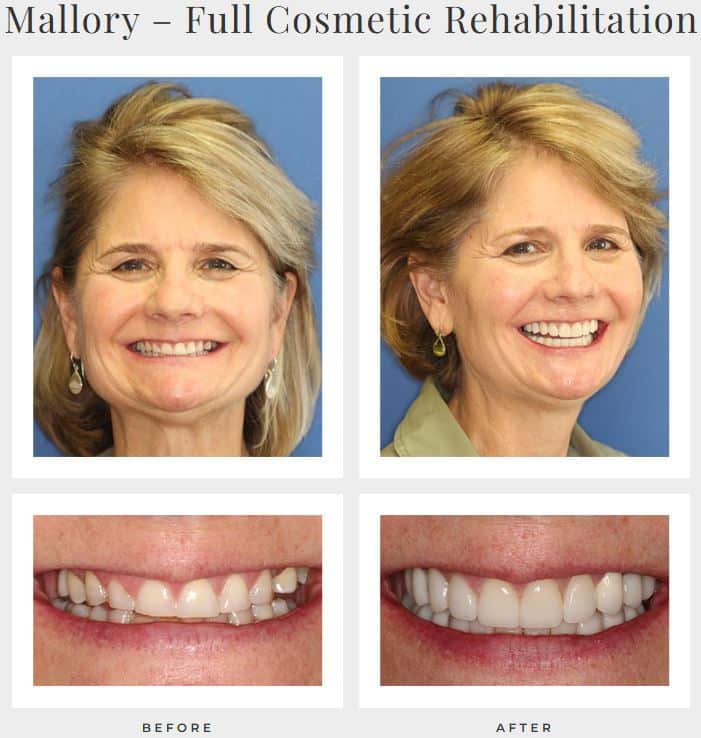
For the past 12 years, I’ve had porcelain crowns on my front teeth. I’m wearing braces at age 42, and one of the crowns I knew was somewhat defective. It has a horizontal fracture near the bottom that is getting more noticeable. I am concerned that the crown will break. Is it urgent to get it fixed, or can it wait? I’m hoping that it won’t prolong my ortho treatment. Thanks. Viet from San Diego
Viet,
The fracture will likely eventually break, so it’s wise to get the crown replaced before it becomes an emergency. A broken crown will leave your tooth unprotected and susceptible to breaking.
Cracks or Craze Lines in Crowns
Small cracks or craze lines in teeth or ceramic crowns are not usually a significant concern. However, if you can see the crack, it is progressing. A cosmetic dentist will examine your teeth and crowns and decide if only the cracked one—or all your crowns—require replacement.
If only one crown is replaced, expert color-matching is needed for the existing crowns and your natural teeth. An advanced cosmetic who understands how to manipulate ceramic crowns to match your natural tooth shade and clarity won’t unnecessarily recommend replacing all your crowns. Be cautious with a dentist who tells you that replacing all your crowns is the only way to achieve a match. It means that the dentist doesn’t know how to achieve a match.
What Happens If a Crown Breaks While You’re Wearing Braces?
If your crown breaks and you’re in the middle of orthodontic treatment, your treatment will be somewhat interrupted while you get new crowns. Generally, it takes two visits to get new crowns.
- First visit – Your dentist will prepare your tooth and take digital impressions for a custom crown.
- Waiting period – Your dentist will send the impressions and instructions to a dental ceramist to make a custom crown. It takes about two weeks.
- Second visit – You will return to the office for your dentist to cement the crown to your tooth.
The delay should not significantly lengthen your treatment. orthodontist how getting new crowns will affect your treatment.
Dr. Thaddeus Michalski, a Rocky Hill, Connecticut dentist and Diplomate of the International Congress of Oral Implantologists, sponsors this post.