


How Will I Know If Direct Pulp Capping Worked for My Tooth?
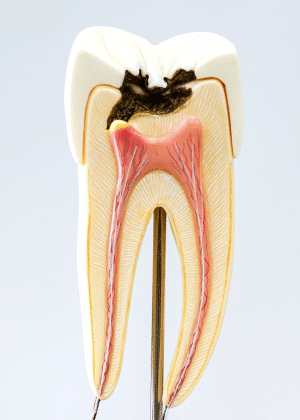 Last month, my dentist performed a direct pulp capping on my top left second molar. After removing decay from the tooth, my dentist said the pulp capping would resolve the exposed tooth pulp. She used a cotton pellet to control minimal bleeding. However, my dentist left some decay that she said was too close to the pulp to remove. She did the pulp capping with calcium hydroxide and a glass ionomer. I’m getting this info from my dental records. The dentist placed an amalgam filling afterward. I don’t have any pain, but I think the tooth feels a little weird. How will I know whether the treatment was successful and I won’t need a root canal? Are there symptoms I should watch for? Thanks. Johanna from GA
Johanna,
A direct pulp cap can work well, and problems usually present immediately. However, we are concerned about your dentist’s technique.
What Happens During a Direct Pulp Capping?
The following steps for direct pulp capping on exposed tooth pulp increase the procedure’s success rate and help prevent the need for root canal treatment.
- Inspect the tooth pulp to ensure it is healthy. Your dentist correctly used a cotton pellet to control bleeding. Easily controlled bleeding signals a healthy pulp that can benefit from a cap. Calcium hydroxide and glass ionomer cement are good materials for the base. However, bonding a composite filling rather than placing an amalgam filling is the best way to seal the tooth and keep bacteria out.
- Remove all decay. Without removing all decay, bacteria in the tooth remain. It can slowly grow, cause an infection, and create the need for root canal treatment.
After a year or two, ask your dentist to x-ray the tooth. If the tooth is healthy, the dentist can remove the decay and replace the filling. The dentist may opt for a crown if removing decay significantly decreases tooth structure. A tooth that responds well to the procedure will develop a protective dentin layer beneath the filling.
We are glad that you don’t have any symptoms from the procedure. If your tooth becomes uncomfortable, see your dentist or ask for a referral to an endodontist (root canal specialist).
Rocky Hill, Connecticut, dentist Dr. Thaddeus Michalski sponsors this post. Read how he provides some of the best dental care in Rocky Hill.