


What’s the Ideal Age for Getting Porcelain Veneers?
What’s the ideal age for porcelain veneers? I got my braces off a year ago, but the condition of my teeth is so bad from blotchiness and decay. Hopefully, it won’t be much longer before I can get veneers. Thanks. Gideon from NC
Gideon,
When properly planned, porcelain veneers preserve tooth structure. Most veneers require only minimal enamel reduction—about 0.3 millimeters—which stays safely away from the pulp. Even in young anterior teeth with larger pulp chambers, veneers do not pose a threat. Some cases require no preparation at all.
Because veneers remain conservative, age alone does not limit candidacy from a biological standpoint.
How Tooth Eruption Affects the Optimal Time for Porcelain Veneers
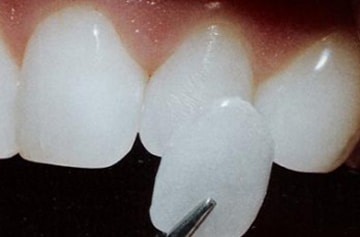
Dentists hesitate to place veneers on teeth that have not fully erupted. In younger teenagers, continued eruption can expose previously covered enamel beneath the veneer, creating an uneven appearance. By age 18, this concern is usually resolved.
How Hygiene Affects the Success of Veneers
Staining that appears after braces is almost always due to plaque retention around brackets. If food debris sits too long, it can cause decalcification, which becomes visible once the braces come off. These areas often match the shape of the former brackets.
An ethical cosmetic dentist will pause before recommending veneers if the risk of decay remains high. Veneers enhance appearance, but they do not compensate for ongoing disease.
- Poor hygiene during braces leads to decalcification and staining
- Constant snacking affects teeth, even with good brushing habits
- Veneers should wait until oral health stabilizes
Consult an expert cosmetic dentist to determine whether veneers are an option for you.
Brian LeSage, DDS, an accredited fellow of cosmetic dentistry in Beverly Hills, sponsors this post.
Rotten Wisdom Tooth Broke at the Gum Line: Is It Risky?
My lower left wisdom tooth decayed, and last week it broke off at the gum line. I can’t see any part of the tooth that may be left. Am I at risk if I don’t see a dentist to get the tooth removed? Thanks. Dianne from Chicago
Dianne,

Based on your description, your tooth’s condition probably isn’t an emergency. Although many dentists would still advise an exam to confirm what’s going on, the tooth is probably nearing the end of its life cycle. Once the crown is gone, the rest of the tooth usually deteriorates rapidly. Without enamel, decay progresses quickly, and the remaining structure often resolves on its own.
Reasons to See a Dentist After a Decayed Tooth Deteriorates
Although the risk of infection spreading into the jawbone is relatively low once the tooth is fully open, allowing decay to progress this far is not ideal. You were fortunate to avoid a significant infection as the decay progressed.
This may also be a sign that other teeth need attention. If it’s been a long time since you’ve seen a dentist, dental problems are much easier to manage with early detection. We encourage you to get a routine exam and X-rays to identify and treat any concerns and prevent complicated treatment later.
Dr. Thaddeus Michalski, a Rocky Hill, Connecticut dentist, sponsors this post. Read about his efforts to provide some of the best dental care in Rocky Hill.